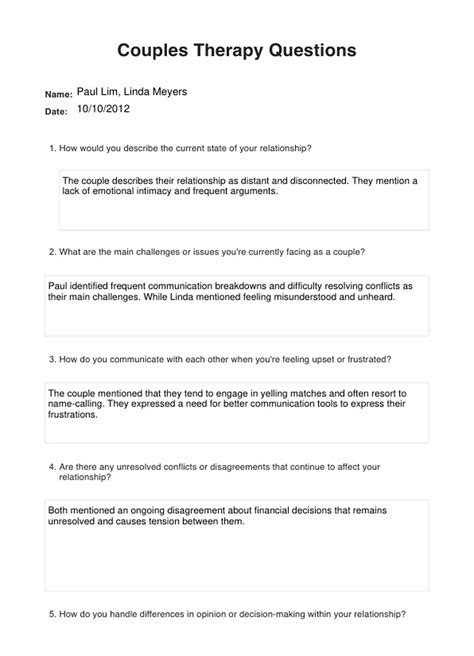
Couples Therapy Templates: Boost Your RelationshipHey there, guys! Let’s dive deep into something truly transformative for any relationship:
couples therapy templates
. These aren’t just any old forms; they are
powerful, structured roadmaps
designed to guide partners through the often-complex journey of strengthening their bond. Whether you’re a seasoned therapist looking to streamline your practice and ensure consistency, or a couple curious about the structured approach behind successful relationship work, understanding these
couples therapy templates
is absolutely crucial. Think of them as your secret weapon for navigating communication breakdowns, resolving long-standing conflicts, and rekindling intimacy. They provide a clear framework, ensuring that every session is productive, purposeful, and moves towards tangible goals. Instead of fumbling through difficult conversations, these templates offer a gentle yet firm hand, guiding both individuals to express their needs, listen deeply, and build empathy.
They turn abstract relationship goals into concrete, actionable steps.
We’re talking about tools that help
uncover hidden dynamics
,
improve mutual understanding
, and ultimately,
build profoundly stronger and more resilient connections
. From initial assessment to ongoing homework assignments,
effective couples therapy templates
ensure that no stone is left unturned, providing a systematic way to address core issues and foster lasting change. So, get ready, because we’re about to explore how these invaluable resources can revolutionize the way relationships are nurtured and repaired, making therapy not just effective, but also deeply empowering for everyone involved.
This exploration will highlight how using well-designed templates ensures that sessions are focused, impactful, and contribute meaningfully to relationship health.
The application of these structured guides allows for a more consistent and measurable approach to therapy, enabling couples to feel more secure in the process and better understand their path to
relationship improvement
.## The Power of Couples Therapy Templates: Why They Work WondersThe concept of using
couples therapy templates
might initially sound a bit rigid, but let me tell you, guys, they are anything but! In reality, these templates are incredibly dynamic tools that bring immense value to the therapeutic process, benefiting both therapists and the couples they work with. For therapists, these templates offer a much-needed
structure and consistency
. Imagine having a clear framework for each session, from intake to termination, which reduces guesswork and ensures that all critical areas are covered. This not only boosts confidence in delivering high-quality care but also significantly
reduces therapist burnout
by providing a systematic approach to complex cases. You see, when you have a template, you’re not reinventing the wheel every time; you’re leveraging proven strategies and exercises, allowing you to focus your energy on the unique dynamics of the couple in front of you, rather than on session planning logistics. This leads to more
efficient and effective sessions
, meaning couples get more value out of their time and investment, making
couples therapy templates
an indispensable resource for any practice.Now, for the couples themselves, the benefits of
couples therapy templates
are equally profound. Firstly, they provide a sense of
transparency and predictability
. When couples understand the “plan” or the flow of therapy, it demystifies the process and makes them feel more secure and engaged. They know what to expect, what topics will be covered, and what kind of work they’ll be doing. This can be especially reassuring for those who might feel apprehensive about therapy. Secondly, these templates help to
clarify goals and track progress
. By working through structured exercises and discussions outlined in a template, couples can pinpoint specific areas for improvement, set measurable objectives, and actually
see
the tangible progress they’re making. This visual and experiential evidence of growth is incredibly motivating and reinforces their commitment to the process. Moreover, many templates include
homework assignments and practice exercises
that extend the therapeutic work beyond the session room, fostering continuous growth and skill-building in their daily lives. This consistent application of new strategies is absolutely vital for long-term
relationship improvement
and developing
effective communication
patterns. Ultimately,
couples therapy templates
empower both parties to engage more deeply, learn new ways of interacting, and build a more resilient, loving partnership. They truly are a game-changer for anyone committed to fostering
healthy and lasting connections
through
structured sessions
.## Decoding Effective Couples Therapy Templates: Essential ComponentsAlright, guys, so we’ve talked about
why
couples therapy templates
are so incredibly beneficial. Now, let’s pull back the curtain and explore
what actually makes
a template truly effective. It’s not just a random collection of questions; it’s a thoughtfully designed sequence of steps, each serving a vital purpose in the therapeutic journey. Understanding these
essential components
will help both therapists in selecting or creating the best tools, and couples in appreciating the structured approach to their healing.First up,
Assessment and Intake forms
are the foundational blocks of any good template. Before you can even begin to address issues, you need to understand the landscape. These forms gather crucial information about each partner’s individual history, family background, previous relationship experiences, and their perspectives on the current relationship challenges. They often include questionnaires about communication styles, conflict resolution patterns, and intimacy levels. This initial data collection helps therapists gain a comprehensive understanding of the couple’s unique dynamics, identifying key areas for intervention right from the start. Without a thorough assessment, therapy can feel like shooting in the dark, leading to less focused
relationship improvement
.Next,
Collaborative Goal Setting
is paramount. An effective template guides the couple and therapist in jointly identifying specific, measurable, achievable, relevant, and time-bound (SMART) goals for their therapy. These goals might range from “improving active listening skills” to “increasing weekly intimate time” or “resolving arguments more constructively.” Templates often include sections for documenting these goals, along with initial ideas on how to achieve them. This ensures that both partners feel heard and invested in the therapeutic direction, creating a shared vision for their
relationship improvement
.Following goal setting, a clear
Session Structure
is a core component. A good template outlines the typical flow of a session: a check-in or warm-up, the main therapeutic activity or discussion, processing what happened, and then planning for the time between sessions. This structure provides a sense of predictability and purpose, helping to keep sessions focused and productive. It prevents tangents and ensures that valuable time is used effectively to address the core issues, making the most of every
structured session
.Crucially,
effective couples therapy templates
incorporate
Specific Interventions and Exercises
. This is where the real work happens! These might include communication skill-building exercises (like active listening prompts or “speaker-listener” techniques), conflict resolution strategies (such as identifying triggers or practicing repair attempts), intimacy-building activities (like guided conversations about desires or non-sexual touch exercises), or empathy-building prompts (like “fill-in-the-blanks” about a partner’s feelings). These aren’t just theoretical discussions; they are practical, hands-on activities that allow couples to
practice new ways of interacting
in a safe, guided environment. They provide concrete tools that couples can immediately apply, fostering
effective communication
and constructive engagement.Finally,
Homework Assignments and Progress Tracking
are indispensable. The real change in a relationship happens outside the therapy room. Effective templates include sections for assigning and reviewing homework – practice exercises, journaling prompts, or specific communication challenges designed to reinforce new skills. Tracking progress, often through simple rating scales or reflection questions, helps both the couple and the therapist monitor changes, celebrate successes, and identify areas that need further attention. These components ensure that the therapeutic gains are consolidated and integrated into the couple’s daily life, making the
couples therapy template
a truly holistic tool for lasting
relationship improvement
and demonstrating clear progress in
structured sessions
.## Popular Frameworks and Their Template ApplicationsAlright, let’s get into the nitty-gritty, guys! When we talk about
couples therapy templates
, it’s important to understand that many of them are rooted in well-established therapeutic frameworks. These frameworks provide the theoretical backbone and the proven strategies that make the templates so effective. Knowing the origin helps us appreciate the depth and purpose behind each exercise. Let’s explore some of the most popular approaches and how they translate into practical, template-driven work for
relationship improvement
.### Gottman Method: Building Sound Relationship Houses with TemplatesThe
Gottman Method
is arguably one of the most research-backed approaches to couples therapy, and it lends itself incredibly well to structured
couples therapy templates
. Developed by Dr. John Gottman and Dr. Julie Schwartz Gottman, this method focuses on strengthening what they call the “Sound Relationship House,” a metaphor for the nine components essential for healthy relationships. Templates inspired by the Gottman Method often guide couples through specific exercises designed to build each of these components. For instance, you’ll find templates for creating “Love Maps,” which are essentially detailed guides to your partner’s inner world – their hopes, dreams, fears, and interests. These templates might include prompts like “What are three current stressors for your partner?” or “What is one of your partner’s life dreams?” helping couples
deepen their knowledge
of each other.Another common template type is for “Fondness and Admiration” exercises, where partners are guided to share specific moments or qualities they appreciate about each other, consciously reinforcing positive regard. You’ll also see templates for “Turning Towards” bids for connection, helping couples identify and respond to their partner’s subtle requests for attention, humor, or affection. Crucially, Gottman-informed
couples therapy templates
provide structured ways to manage conflict through “Stress-Reducing Conversations” or “Dreams within Conflict” dialogues, offering step-by-step guides on how to discuss disagreements without overwhelming each other. These templates help couples
reduce negative escalation
and foster an environment where problems can be addressed constructively. By breaking down complex relationship skills into manageable, template-guided steps, the Gottman Method empowers couples to proactively build and maintain a strong, resilient, and emotionally intelligent partnership, making
couples therapy templates
an indispensable tool for achieving lasting
emotional connection
and a
sound relationship house
.### Emotionally Focused Therapy (EFT): Uncovering Attachment Needs Through TemplatesNext up, let’s talk about
Emotionally Focused Therapy (EFT)
. This approach, pioneered by Dr. Sue Johnson and Dr. Les Greenberg, is all about getting to the
root of emotional connection
and attachment needs, often revealed through a couple’s negative interaction cycles. EFT-inspired
couples therapy templates
are designed to help partners understand these cycles, express deeper emotions, and ultimately create a more secure emotional bond. The therapy typically moves through stages: “De-escalation,” “Restructuring Interactions,” and “Consolidation.” Templates play a vital role in each of these.During the “De-escalation” phase, templates might include exercises for identifying the negative cycle itself – helping couples map out their typical arguments, pinpointing triggers, and understanding each partner’s role and underlying feelings in the pattern. This could involve prompts like “When my partner does X, I feel Y, and I tend to Z” for both individuals. The goal here is to help partners see the
cycle as the enemy
, not each other. In the “Restructuring Interactions” phase, templates might guide couples in expressing their
vulnerable, underlying attachment needs
directly to their partner, rather than through defensive or angry behaviors. These could be guided dialogues or sentence stems like “What I really need from you right now is…” or “Beneath my anger, I’m actually feeling…” These exercises are incredibly powerful for fostering deep empathy and understanding. Finally, “Consolidation” templates focus on integrating these new ways of interacting into daily life, creating new narratives about their relationship, and building a more secure emotional base. By systematically guiding couples through identifying, expressing, and responding to
attachment needs
, EFT-based
couples therapy templates
are instrumental in transforming insecure
emotional bonds
into deeply secure and loving connections, significantly contributing to
relationship improvement
.### Cognitive Behavioral Therapy (CBT) for Couples: Reshaping Thoughts and BehaviorsLast but not least, we have
Cognitive Behavioral Therapy (CBT) for Couples
. This approach, as its name suggests, focuses on identifying and changing
maladaptive thought patterns and behaviors
that contribute to relationship distress. CBT-inspired
couples therapy templates
are highly practical, designed to help partners develop healthier ways of thinking, communicating, and problem-solving together. They are fantastic tools for addressing specific, concrete issues and equipping couples with actionable skills for
effective communication
.Templates in CBT for couples often start with
identifying automatic negative thoughts
that arise during conflict. For example, a template might include a thought record where each partner writes down a triggering event, their automatic thoughts, the emotions they felt, and then a more balanced or alternative thought. This helps couples recognize how their interpretations of events can fuel arguments. Another common use of these
couples therapy templates
is for
improving communication skills
. These templates can provide structured exercises for active listening, “I” statements, and clear expression of needs and feelings. They might include worksheets where couples practice rephrasing complaints as requests or role-playing difficult conversations with guided prompts.Problem-solving templates are also a cornerstone of CBT for couples, guiding partners through a step-by-step process to define a problem, brainstorm solutions, evaluate options, and implement a chosen solution. This systematic approach helps couples avoid unproductive arguments and work together as a team to tackle challenges. Furthermore,
behavioral experiments
might be outlined in templates, encouraging couples to try out new behaviors (e.g., spending 15 minutes a day engaging in a shared activity) and observe the results. By providing concrete frameworks for challenging negative
thought patterns
and establishing positive
behavioral change
, CBT-based
couples therapy templates
empower partners with practical skills to overcome difficulties, communicate more effectively, and build a more satisfying and harmonious relationship, making them a crucial tool for
relationship improvement
.## Crafting Your Own Bespoke Couples Therapy TemplatesAlright, guys, while there are tons of fantastic pre-made
couples therapy templates
out there rooted in proven methodologies, there’s immense power in
crafting your own bespoke tools
. Imagine having resources perfectly tailored to your unique approach as a therapist, or even for couples who are proactively working on their relationship and want to structure their self-help journey. Designing your own templates isn’t just about making them pretty; it’s about integrating your specific expertise, addressing niche client needs, and creating a truly personalized therapeutic experience.The first step in designing your
custom couples therapy templates
is to identify the core needs and common challenges you encounter. Are most of your couples struggling with communication? Do they need help with conflict resolution, or perhaps rekindling intimacy? By pinpointing these recurring themes, you can focus on developing templates that directly target these areas. Think about the specific interventions or exercises you find most effective in your practice. Perhaps you have a unique way of introducing mindfulness to reduce conflict reactivity, or a particular journaling prompt that consistently elicits deep insights. These personal touches are what make your templates stand out and resonate, contributing to
effective communication
and deeper
relationship improvement
.Flexibility is another key consideration. While a template provides structure, it should never feel rigid or restrictive. Design your templates with space for individual responses, open-ended questions that encourage deeper exploration, and sections that can be easily adapted or skipped if not relevant to a particular couple. Remember, every couple is unique, and your templates should serve as a guide, not a straitjacket for their
structured sessions
. Integrating different therapeutic approaches can also enrich your
couples therapy templates
. For instance, you might combine a Gottman-inspired “Love Map” exercise with an EFT-based “Negative Cycle Identification” worksheet. This eclectic approach allows you to draw from the strengths of various methodologies, creating a more comprehensive and powerful toolset for
tailored interventions
.Don’t forget about cultural sensitivity and inclusivity. When creating templates, consider the diverse backgrounds, values, and relationship structures of the couples you serve. Use inclusive language, avoid assumptions, and ensure that the exercises are broad enough to be applicable to a wide range of individuals. Soliciting feedback from trusted colleagues or even pilot-testing your templates with a few couples can provide invaluable insights for refinement. Finally, view your
custom couples therapy templates
as living documents. They should evolve as you gain more experience, learn new techniques, and receive feedback.
Continuous learning and refinement
are essential for ensuring your templates remain highly effective and relevant, truly contributing to
personalized therapy
and lasting
relationship improvement
.## Maximizing the Impact: Tips for Using Couples Therapy Templates EffectivelyOkay, guys, you’ve got these amazing
couples therapy templates
– whether they’re pre-made gems or your own bespoke creations. But simply
having
them isn’t enough; the real magic happens in
how
you use them. Maximizing their impact involves a blend of strategic application, thoughtful facilitation, and genuine client engagement. Let’s explore some key tips to ensure these tools truly elevate your therapeutic work and lead to significant
relationship improvement
.First and foremost, remember that
couples therapy templates
are
tools, not scripts
. While they provide structure, they should always be wielded with flexibility and a keen awareness of the couple’s unique dynamics in the room. Don’t be afraid to deviate, adapt, or even set a template aside if the moment calls for a more spontaneous or client-led discussion. The goal is to support the therapeutic process, not to rigidly adhere to a piece of paper.
Always prioritize the couple’s needs and emotional state over strict adherence to the template
, ensuring
effective use of templates
.A crucial tip is to embrace
client collaboration
when introducing and using templates. Instead of just handing over a worksheet, involve the couple in the selection and purpose of the exercise. Explain
why
you’re using a particular template, what the intended benefits are, and how it connects to their stated goals. This psychoeducation empowers couples, makes them active participants, and increases their buy-in. For example, you might say, “This communication template is designed to help you practice active listening, which we discussed as a key area for improvement. How does that sound to you?” This approach ensures
client engagement
and makes the process feel more collaborative, improving
effective communication
.Effective facilitation is also key. When working through a template, guide the couple gently. Encourage both partners to participate, ensure equal airtime, and help them process their thoughts and feelings as they arise. If an exercise uncovers strong emotions, don’t rush past them to complete the template; instead, pause and address the emotional content first. The template can wait. This shows the couple that their emotions are valued and central to the
therapy process
. After completing an exercise, always
debrief thoroughly
. Discuss what each partner learned, what felt challenging, what insights emerged, and how they might apply these learnings outside the session. This reflective process solidifies the therapeutic gains for
structured sessions
.Finally, emphasizing
follow-through and accountability
with homework assignments is vital. Many
couples therapy templates
include sections for practice exercises or discussions between sessions. These are not optional extras; they are crucial for integrating new skills into daily life. Encourage couples to genuinely engage with their homework and come prepared to discuss their experiences. Reviewing homework at the start of the next session reinforces its importance and helps track progress. By applying these tips, you’ll transform your
couples therapy templates
from static documents into dynamic catalysts for profound
relationship improvement
, fostering deeper understanding, stronger connections, and lasting positive change.## ConclusionSo there you have it, guys! We’ve journeyed through the incredible world of
couples therapy templates
, uncovering their power, understanding their essential components, exploring their roots in popular therapeutic frameworks like Gottman, EFT, and CBT, and even discussing how to craft and effectively use them. It’s clear that these templates are far more than just paperwork; they are indispensable tools that bring
structure, clarity, and intentionality
to the often-messy landscape of relationships. For therapists, they streamline the process, ensure consistency, and reduce burnout, allowing for more focused and impactful interventions. For couples, they demystify therapy, provide a clear roadmap, foster active engagement, and offer concrete strategies for navigating challenges and building a more loving bond. By leveraging the insights and exercises embedded within well-designed
couples therapy templates
, partners can learn to communicate more effectively, resolve conflicts constructively, deepen their emotional connection, and ultimately, build a truly resilient and fulfilling relationship. Remember, the goal is always
relationship improvement
– a journey that is made significantly smoother and more successful with the right tools in hand. So, embrace these templates, adapt them to your unique needs, and watch as they help transform relationships, one structured, insightful step at a time. Here’s to stronger connections and happier partnerships!
